Complete Hajj Guide 2026: Requirements, Rituals, Preparation, and the Journey to the Holy Land

Table of Contents

Performing Hajj is one of the greatest spiritual aspirations for Muslims around the world. However, the journey to the Holy Land requires more than financial readiness. Pilgrims also need proper knowledge, physical preparation, administrative readiness, and a clear understanding of the Hajj process.
This Complete Hajj Guide 2026 explains essential information every prospective pilgrim should know, including Hajj requirements, pillars of Hajj, step-by-step procedures, preparation before departure, important documents, and tips for choosing a trustworthy Hajj organizer.
By understanding the journey from the beginning, pilgrims can prepare themselves better and perform their worship with greater confidence and peace of mind.
What Is Hajj?
Hajj is an Islamic pilgrimage to the Kaaba in Mecca that is performed during a specific period with specific rituals as the fifth pillar of Islam for Muslims who are physically and financially capable.
Unlike Umrah, which can be performed throughout the year, Hajj takes place only during the month of Dhul Hijjah according to the Islamic calendar.
The Hajj journey includes several important rituals, such as:
- Entering Ihram
- Standing at Arafah (Wuquf)
- Spending time at Muzdalifah
- Performing symbolic stoning at Mina
- Tawaf around the Kaaba
- Sa'i between Safa and Marwah
- Tahallul (cutting or shaving hair)
For Muslims, Hajj is not only a physical journey but also a profound spiritual experience that represents devotion, sacrifice, patience, and submission to Allah.
Why Is Understanding Hajj Important Before Departure?
A successful Hajj journey requires proper preparation. Many first-time pilgrims focus mainly on travel arrangements but overlook the importance of understanding the rituals and responsibilities during Hajj.
Having sufficient knowledge helps pilgrims to:
- Perform rituals correctly
- Avoid unnecessary difficulties
- Prepare physically and mentally
- Manage expectations during the journey
- Maintain patience in crowded conditions
Participating in Hajj guidance sessions or Manasik Hajj training before departure is highly recommended because it allows pilgrims to practice the procedures before arriving in Mecca.
Hajj Requirements Every Muslim Should Understand
Hajj becomes obligatory when a Muslim fulfills the required conditions, including faith, maturity, sound mind, and the ability (Istitha'ah) to perform the pilgrimage.
The main requirements include:
1. Being Muslim
Hajj is an act of worship specifically required from Muslims.
A person must have faith in Islam before Hajj becomes an obligation.
2. Being Mature and Mentally Capable
A pilgrim must have reached adulthood and possess the ability to understand and perform religious obligations.
3. Having the Ability (Istitha'ah)
One of the most important concepts in Hajj is Istitha'ah, meaning the ability or capability to perform the pilgrimage.
This includes:
Financial capability
Pilgrims should have sufficient financial resources for:
- Travel expenses
- Accommodation
- Transportation
- Daily necessities
- Family responsibilities left behind
Physical capability
Hajj requires considerable physical activity, including:
- Walking long distances
- Spending time outdoors
- Moving between holy sites
Therefore, maintaining health before departure is an essential part of Hajj preparation.
Safety and travel conditions
The journey must be possible and safe according to applicable regulations.
For Indonesian pilgrims, health requirements and Hajj preparation are coordinated through official government institutions, including the Ministry of Health and Ministry of Religious Affairs.
Pillars of Hajj: Essential Rituals That Must Be Completed
The pillars of Hajj are the fundamental actions that determine the validity of Hajj. If one of these pillars is not completed, the Hajj is considered incomplete.
The pillars of Hajj include:
1. Ihram
Ihram is the intention to begin the Hajj pilgrimage and enter a sacred state with specific rules and restrictions.
Pilgrims enter Ihram from designated locations known as Miqat.
During Ihram, pilgrims must observe specific prohibitions and maintain a state of worship and discipline.
2. Wuquf at Arafah
Wuquf at Arafah is considered the most important part of Hajj.
Pilgrims gather at the plain of Arafah on the 9th day of Dhul Hijjah to:
- Pray
- Remember Allah
- Seek forgiveness
- Make personal supplications
The gathering at Arafah represents equality among Muslims from different backgrounds, nations, and cultures.
3. Tawaf Ifadah
Tawaf Ifadah is the ritual of walking around the Kaaba seven times.
This ritual symbolizes devotion and the continuous remembrance of Allah.
4. Sa'i Between Safa and Marwah
Sa'i is the act of walking seven times between the hills of Safa and Marwah.
This ritual commemorates the perseverance of Hajar (Hagar), the mother of Prophet Ismail, in searching for water in the desert.
5. Tahallul
Tahallul is performed by cutting or shaving the hair after completing certain Hajj rituals.
It symbolizes completion and renewal after entering the sacred journey.
6. Order (Tertib)
All pillars of Hajj must be performed according to the correct order and requirements.
Difference Between Hajj Pillars, Obligations, and Sunnah Practices
Many first-time pilgrims are confused about the difference between these three categories.
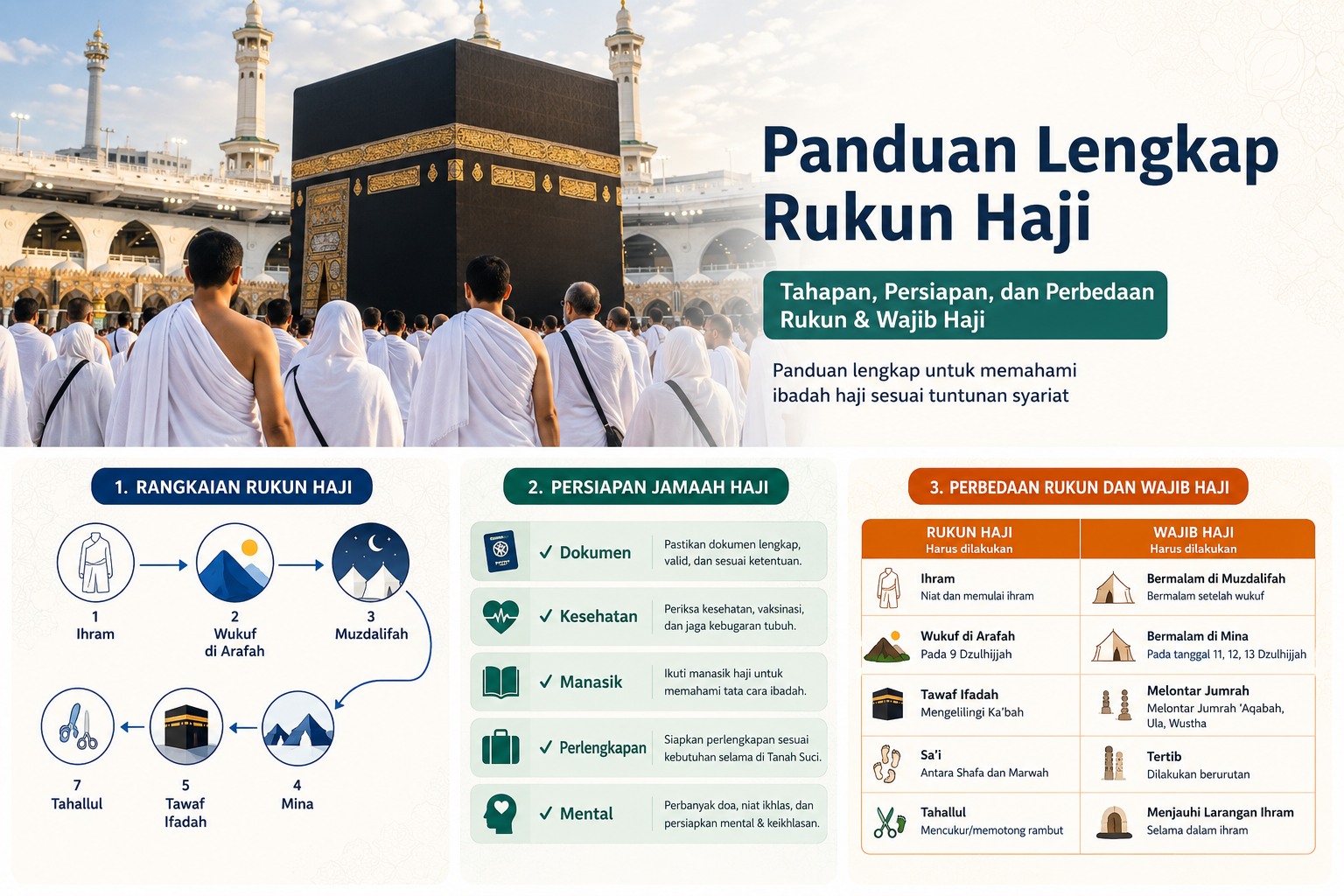 ChatGPT Image Jul 18, 2026, 03_15_37 PM.png 1.95 MB
The Importance of Learning the Hajj Process Before Traveling
The Hajj journey involves millions of Muslims from different countries gathering in the same locations within a limited period.
Because of this, pilgrims need:
- Discipline
- Patience
- Understanding of procedures
- Respect for other pilgrims
- Ability to follow group instructions
Proper preparation makes the pilgrimage experience more organized and meaningful.
Step-by-Step Hajj Process: From Departure to Completion
The Hajj process consists of several important stages, beginning with preparation before departure, entering the state of Ihram, performing the main rituals in Mecca and the holy sites, and completing the pilgrimage according to Islamic guidelines.
Although the detailed schedule may vary depending on the Hajj program and official arrangements, the general journey follows a structured sequence.
1. Pre-Departure Preparation
Before traveling to the Holy Land, pilgrims should complete several preparations, including:
- Attending Hajj guidance sessions (Manasik Hajj)
- Completing required documents
- Preparing personal equipment
- Maintaining physical health
- Understanding Hajj rituals and regulations
Manasik Hajj training is important because it helps pilgrims understand practical procedures, including how to perform rituals, manage movement between holy sites, and adapt to conditions during Hajj.
2. Entering Ihram and Beginning the Hajj Journey
The Hajj journey begins when pilgrims enter the state of Ihram at the designated Miqat.
During Ihram, pilgrims:
- Make the intention for Hajj
- Recite Talbiyah
- Follow the rules and restrictions of Ihram
This stage reminds pilgrims that Hajj is not merely a physical journey but an act of worship requiring sincerity, discipline, and humility.
3. Arrival in Mecca
After arriving in Mecca, pilgrims prepare for the main Hajj activities.
Activities may include:
- Performing initial worship activities
- Reviewing Hajj procedures
- Preparing mentally and physically for the peak days of Hajj
Mecca is the central destination of Hajj because it is home to the Kaaba, the direction of prayer for Muslims worldwide.
4. Wuquf at Arafah
Wuquf at Arafah takes place on the 9th of Dhul Hijjah.
It is one of the most significant moments of Hajj, where pilgrims gather in Arafah to:
- Pray
- Make supplications
- Reflect spiritually
- Seek forgiveness
Many scholars emphasize the importance of Wuquf because it represents the core moment of the Hajj pilgrimage.
5. Overnight Stay at Muzdalifah
After leaving Arafah, pilgrims proceed to Muzdalifah.
During this stage, pilgrims:
- Rest
- Perform prayers
- Prepare for the next activities in Mina
The movement between Arafah, Muzdalifah, and Mina requires patience because millions of pilgrims travel within a limited time.
6. Activities in Mina
In Mina, pilgrims perform important activities such as:
- Stoning of the Jamarat
- Performing sacrifices for those required
- Completing Tahallul
The Jamarat ritual symbolizes rejecting temptation and strengthening commitment to obedience.
7. Tawaf and Sa'i Completion
After completing the required stages, pilgrims perform:
- Tawaf around the Kaaba
- Sa'i between Safa and Marwah
These rituals complete important parts of the Hajj journey.
Hajj Preparation Checklist Before Departure
A successful Hajj requires preparation in four main areas: knowledge, physical condition, administration, and personal readiness.
1. Religious and Knowledge Preparation
Before departure, pilgrims should understand:
- Basic Hajj rituals
- Required prayers and supplications
- Rules during Ihram
- The sequence of Hajj activities
- Appropriate behavior during pilgrimage
Learning before departure helps prevent confusion and allows pilgrims to focus on worship.
2. Physical Preparation
Hajj involves significant physical activities.
Pilgrims may need to:
- Walk long distances
- Stand for extended periods
- Move between locations with large crowds
- Adapt to different weather conditions
Recommended preparation includes:
- Regular light exercise
- Maintaining balanced nutrition
- Medical check-ups
- Following health recommendations
3. Mental and Emotional Preparation
Hajj is a spiritual journey that requires patience.
Pilgrims should prepare themselves for:
- Crowded environments
- Different cultures and languages
- Schedule adjustments
- Unexpected situations
A calm and patient attitude can greatly improve the Hajj experience.
4. Personal Equipment Preparation
Common items pilgrims may need include:
Documents
- Passport
- Identification documents
- Hajj registration documents
- Health records
Personal items
- Ihram clothing
- Comfortable footwear
- Personal medication
- Basic hygiene supplies
- Small bag for daily necessities
The exact requirements may differ depending on official regulations and the organizer’s guidance.
Important Documents for Indonesian Hajj Pilgrims
Hajj document requirements may change according to government policies, so pilgrims should always follow the latest information from official authorities.
Generally, pilgrims should prepare:
- Valid passport
- Hajj registration documents
- Identification documents
- Health certificates
- Required travel documents
The Indonesian Ministry of Religious Affairs provides official information regarding Hajj administration, registration procedures, and pilgrimage services.
How to Choose an Official and Reliable Hajj Organizer
Choosing the right Hajj organizer is an important decision because it affects the quality of guidance, services, and overall pilgrimage experience.
Before registering, prospective pilgrims should consider several factors.
1. Verify Legal Authorization
The first step is checking whether the organizer has official permission to provide Hajj services.
A legitimate organizer should have:
- Clear legal status
- Proper authorization
- Transparent service information
Avoid choosing based only on promotional offers or unusually low prices.
2. Consider Experience and Track Record
Experience matters when organizing a complex journey involving thousands of pilgrims.
Important considerations include:
- Years of operation
- Previous pilgrim experiences
- Quality of guidance
- Support system during the journey
Buminata Wisata has been serving Hajj and Umrah pilgrims from Bali since 1994, focusing on providing trusted pilgrimage services and guidance for Indonesian Muslims.
3. Review Program Details Carefully
Before registering, pilgrims should understand:
- Accommodation arrangements
- Transportation services
- Guidance programs
- Schedule planning
- Support provided during Hajj
Clear information helps pilgrims make informed decisions.
4. Understand the Difference Between Hajj Programs
Indonesia provides different Hajj arrangements based on official regulations.
For prospective pilgrims considering different options, understanding the distinction between regular Hajj and special Hajj programs is important before making a decision.
A detailed explanation can be found in the guide about the difference between Regular Hajj and Special Hajj programs.
Common Mistakes First-Time Hajj Pilgrims Should Avoid
Even with good intentions, some pilgrims experience difficulties because of inadequate preparation.
Here are common mistakes to avoid:
1. Focusing Only on Travel Arrangements
Some pilgrims prepare luggage and flights but do not spend enough time learning Hajj rituals.
Solution:
Prioritize religious preparation and attend Manasik Hajj sessions.
2. Ignoring Physical Preparation
Hajj requires stamina.
Solution:
Start improving fitness months before departure.
3. Delaying Administrative Preparation
Missing documents or incomplete requirements can create unnecessary stress.
Solution:
Prepare documents early and follow official instructions.
4. Choosing an Organizer Without Verification
A low-cost offer does not always mean better service.
Solution:
Check authorization, experience, and transparency before registering.
FAQ Section
1. What is Hajj?
Answer:
Hajj is an Islamic pilgrimage to the Kaaba in Mecca performed during a specific period with specific rituals. It is the fifth pillar of Islam and is required for Muslims who have the physical, financial, and safety capability to perform it.
2. What are the requirements for performing Hajj?
Answer:
The main requirements for Hajj include being Muslim, reaching maturity, having sound mind, and possessing the ability (Istitha'ah), including financial capability, physical health, and safe travel conditions.
3. What are the pillars of Hajj?
Answer:
The pillars of Hajj include Ihram, Wuquf at Arafah, Tawaf Ifadah, Sa'i between Safa and Marwah, Tahallul, and performing the rituals in the correct order.
4. How should I prepare before going for Hajj?
Answer:
Pilgrims should prepare by learning Hajj rituals through Manasik training, maintaining physical health, completing documents, preparing personal equipment, and understanding the journey process before departure.
5. How do I choose a reliable Hajj organizer?
Answer:
Choose a Hajj organizer with official authorization, clear legal status, proven experience, transparent programs, and proper guidance services before and during the pilgrimage.
 Check Schedule
OTHER HAJJ
4 August 2026 - Learn why Hajj waiting times in Indonesia can last for decades and discover how Buminata Hajj Plus offers a faster departure estimate, premium hotels, and world-class airline services.
25 July 2026 - The cost of Buminata Hajj Plus 2026 varies depending on the package you choose: Executive Double, Executive Triple, or Executive Quad. The main difference lies in room occupancy, while all packages include professional guidance, premium accommodations near the holy mosques, and comprehensive support throughout the pilgrimage. Choosing the right package depends on your preferred level of privacy, comfort, and budget.
19 July 2026 - Learn complete Hajj requirements including eligibility, Istitha'ah, health preparation, and conditions every Muslim must fulfill before departure.