What Is Hajj Dam? Types, Rules, and How to Pay It

Table of Contents

Many first-time pilgrims only learn about Hajj dam during manasik sessions or after arriving in the Holy Land. In fact, understanding dam is important because it is directly related to the proper fulfillment of Hajj rituals according to Islamic law.
In simple terms, dam hajj is a compensation or penalty that must be fulfilled by pilgrims under certain conditions during Hajj. Dam may be required because of the type of Hajj performed, such as Hajj Tamattu or Hajj Qiran, or due to violations committed during ihram.
What Is Dam in Hajj?
Dam in Hajj refers to an obligation in the form of:
- animal sacrifice,
- fasting,
- or another form of compensation required under Islamic law.
In Hajj jurisprudence, dam is not simply a “fine,” but part of the rules of worship that carry spiritual and legal significance.
Generally, dam is divided into:
- Dam Nusuk (related to the type of Hajj)
- Dam due to ihram violations
- Dam for leaving obligatory Hajj rituals
When Is a Pilgrim Required to Pay Dam?
Not all pilgrims are required to pay dam.
Dam becomes obligatory in the following situations:
1. Performing Hajj Tamattu
Pilgrims who perform Umrah first and then continue with Hajj are required to pay dam.
👉 Read also:
What Is Hajj Tamattu? Definition, Steps, and Benefits
2. Performing Hajj Qiran
Hajj Qiran combines Umrah and Hajj in one state of ihram, which also requires dam.
3. Violating Ihram Restrictions
Examples include:
- cutting hair,
- wearing perfume,
- wearing stitched clothing for men,
- hunting animals.
4. Leaving Obligatory Hajj Rituals
For example:
- not staying overnight in Muzdalifah,
- not performing stoning at Mina,
- not performing Tawaf Wada.
Types of Hajj Dam
Below are the common types of dam in Hajj:
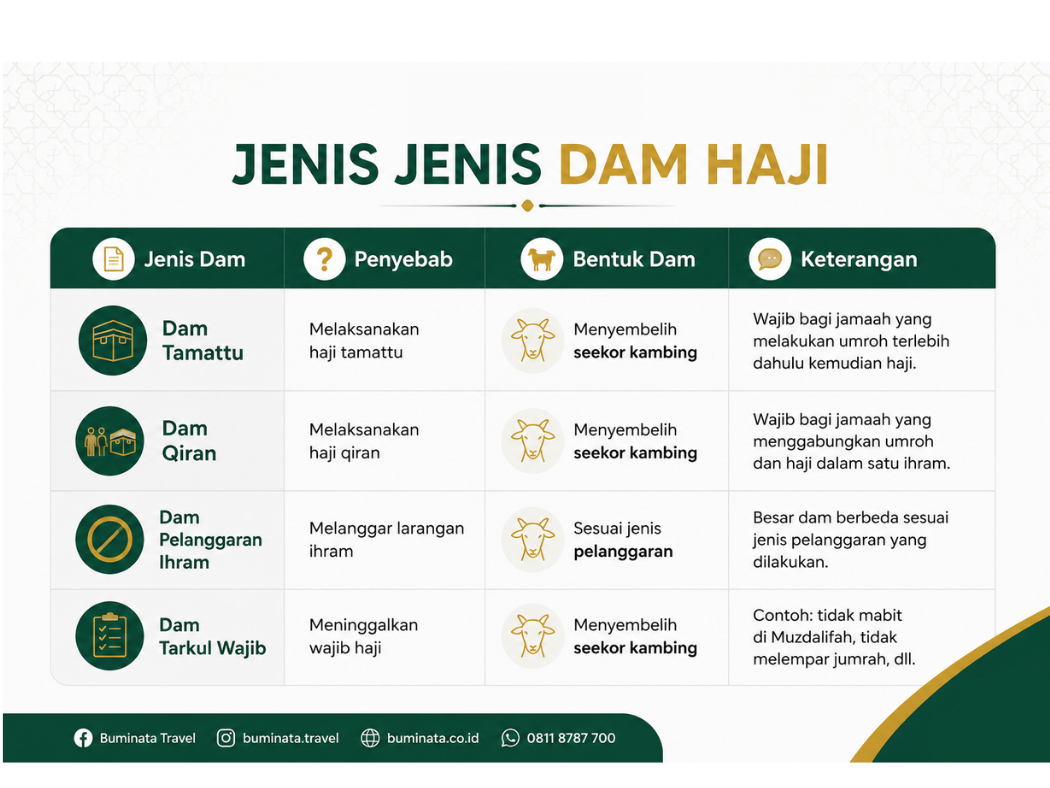
Dam for Hajj Tamattu and Qiran
Dam for Hajj Tamattu and Qiran is categorized as Dam Nusuk, which is required because of the type of Hajj chosen.
Most Indonesian pilgrims perform Hajj Tamattu, making this type of dam very common.
Typically, the dam is fulfilled by:
- sacrificing one goat or sheep,
- performed in the Holy Land,
- with the meat distributed to the poor.
Dam Due to Ihram Violations
There is also dam caused by violating the restrictions of ihram.
Examples include:
- cutting nails during ihram,
- using perfume,
- covering the head for men,
- wearing stitched clothes for men.
The required compensation varies depending on the type and severity of the violation according to Islamic jurisprudence.
👉 Read also:
Ihram Restrictions in Hajj and Umrah
How Much Is Hajj Dam?
The cost or value of dam may vary depending on:
- the type of violation,
- the type of Hajj,
- livestock prices in Saudi Arabia.
In general:
- Dam for Tamattu or Qiran requires one goat or sheep.
- If a pilgrim cannot afford it, fasting may be allowed as an alternative.
Since dam costs may change each Hajj season, pilgrims should always check the latest information from official Hajj authorities or trusted guides.
How to Pay Hajj Dam
Today, Hajj dam is usually paid through:
- official government services,
- licensed providers in Saudi Arabia,
- or trusted Hajj travel agencies.
General steps include:
- Consult your Hajj guide regarding your dam obligation
- Determine the correct type of dam
- Make payment through an official service
- Ensure the sacrifice is performed according to Islamic rules
Pilgrims should avoid unofficial or unclear providers to ensure the validity of their worship.
Can Dam Be Replaced with Fasting?
In certain situations, dam can be replaced with fasting if the pilgrim cannot afford an animal sacrifice.
For Hajj Tamattu, the common rule is:
- fasting 3 days during Hajj,
- and 7 days after returning home.
However, pilgrims are strongly encouraged to consult qualified scholars or Hajj supervisors before making such decisions.
Difference Between Dam and Fidyah
Many pilgrims confuse dam and fidyah.
Generally:
- Dam is specifically related to Hajj rituals.
- Fidyah is often associated with fasting compensation or certain religious violations.
However, in some Islamic discussions, the terms may overlap depending on context.
Common Mistakes Related to Hajj Dam
Some common mistakes include:
- not understanding which type of dam is required,
- assuming all pilgrims must pay dam,
- paying through unofficial parties,
- ignoring ihram restrictions,
- not attending manasik sessions.
For this reason, joining proper Hajj guidance sessions and choosing an official Hajj travel agency is very important.
👉 Read also:
How to Check Official PIHK Through the Ministry of Religious Affairs
Tips Before Performing Hajj
To better prepare for Hajj:
- learn manasik early,
- understand your type of Hajj,
- memorize ihram restrictions,
- consult trusted Hajj guides,
- choose a licensed Hajj travel agency.
About Buminata Wisata
Buminata Wisata is one of the trusted Hajj and Umrah travel providers focusing on comfort, guidance, and proper worship preparation for pilgrims.
Besides organizing travel arrangements, Buminata also emphasizes educational guidance so pilgrims better understand important aspects of worship, including:
- types of Hajj,
- ihram restrictions,
- and Hajj dam regulations.
This educational approach helps pilgrims perform their worship more calmly and according to Islamic teachings.
Pilgrims are also encouraged to verify the legality of travel agencies through official systems provided by the Indonesian Ministry of Religious Affairs before making decisions.
FAQ About Hajj Dam
What is dam in Hajj?
Dam in Hajj is a required compensation in the form of animal sacrifice, fasting, or other forms of fidyah due to specific situations during Hajj.
Do all pilgrims need to pay dam?
No. Dam is generally required for pilgrims performing Hajj Tamattu, Hajj Qiran, or those violating ihram rules.
What is the dam for Hajj Tamattu?
The common dam for Hajj Tamattu is sacrificing one goat or sheep in the Holy Land.
Can Hajj dam be replaced with fasting?
Yes, under certain conditions and according to Islamic law, fasting may replace dam if the pilgrim cannot afford the sacrifice.
How do pilgrims pay Hajj dam?
Hajj dam is usually paid through official government services, Hajj guides, or licensed providers in Saudi Arabia.
Conclusion
Hajj dam is an important part of Hajj rituals that every pilgrim should understand before departure. Dam may become obligatory because of the type of Hajj performed, such as Hajj Tamattu or Qiran, or because of violations during ihram.
By understanding the types, rules, and payment procedures of Hajj dam, pilgrims can perform their worship more confidently and in accordance with Islamic teachings.
Before departing for the Holy Land, make sure to attend proper manasik sessions and choose an officially registered Hajj travel agency for a safer and more organized pilgrimage journey.
 Learn More
OTHER HAJJ
4 August 2026 - Learn why Hajj waiting times in Indonesia can last for decades and discover how Buminata Hajj Plus offers a faster departure estimate, premium hotels, and world-class airline services.
25 July 2026 - The cost of Buminata Hajj Plus 2026 varies depending on the package you choose: Executive Double, Executive Triple, or Executive Quad. The main difference lies in room occupancy, while all packages include professional guidance, premium accommodations near the holy mosques, and comprehensive support throughout the pilgrimage. Choosing the right package depends on your preferred level of privacy, comfort, and budget.
19 July 2026 - Learn complete Hajj requirements including eligibility, Istitha'ah, health preparation, and conditions every Muslim must fulfill before departure.